Japan, Understood
Why the world's most philosophically sophisticated country rewards those who arrive with intention — and how to experience it at a level most visitors never reach.
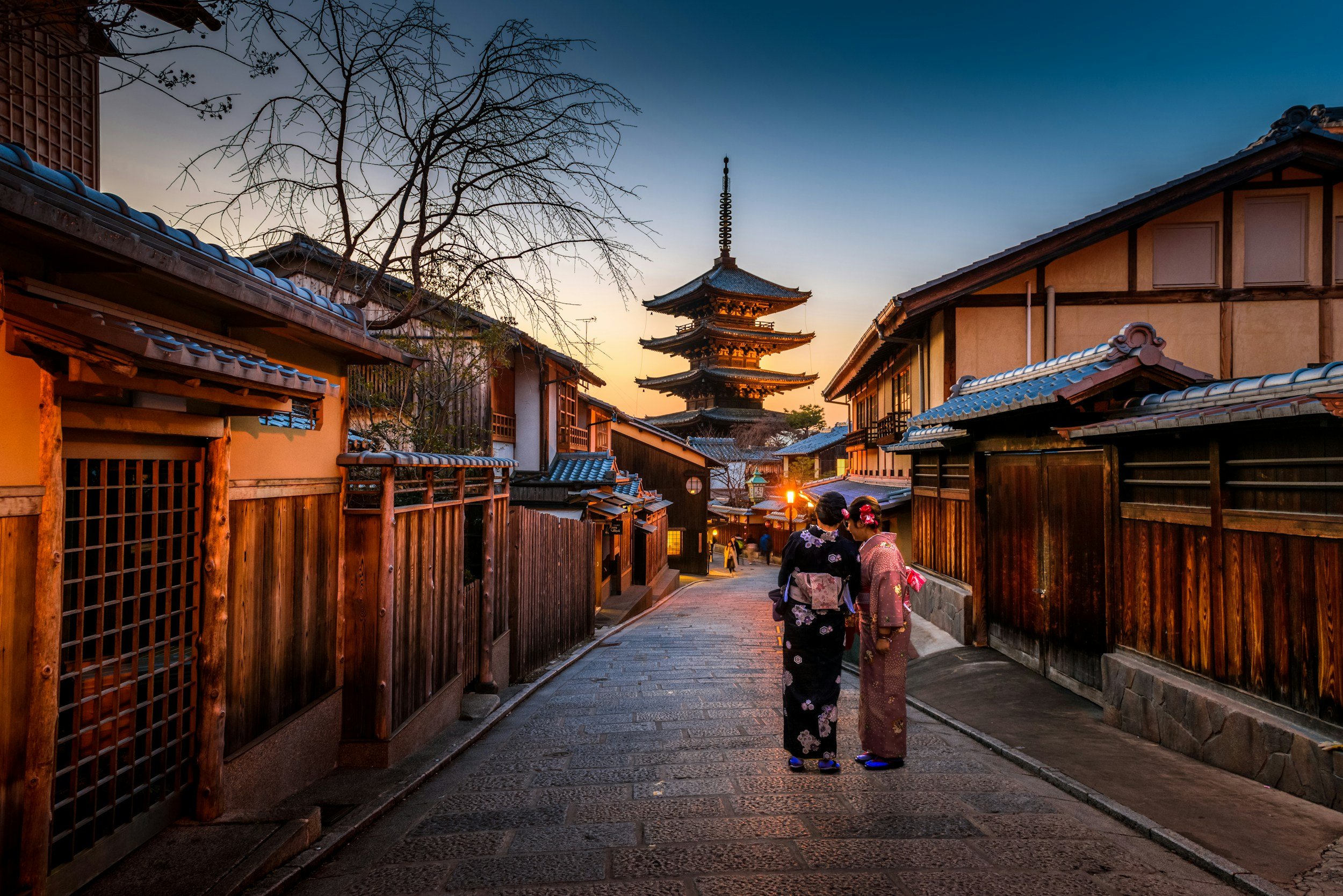
Kyoto street at dawn
There is a moment Japan gives you, if you are paying attention. It usually arrives somewhere unexpected — not at the famous temple or the celebrated restaurant, but in the pause before a tea bowl is lifted, in the geometry of a raked garden at dusk, in the particular quality of silence inside a centuries-old castle. The moment when you understand that this country has been thinking about the art of living well for longer than most of the world has been keeping records.
Japan does not announce itself. It reveals itself — slowly, in layers, to those who have arrived with enough stillness to receive it.
I have written in these pages about Kintsugi — the Japanese practice of repairing broken ceramics with gold, of making the fracture visible rather than concealing it. I have written about Ma — the philosophy of meaningful space, of what lives in the pause between things. These are not decorative concepts. They are the operating philosophy of an entire culture, expressed through everything from the design of a temple garden to the choreography of a kaiseki meal.
What I want to explore here is something more practical: what it means to experience Japan at the level it deserves. Not the famous sites efficiently visited, but Japan as a living culture — intimate, demanding, and extraordinary for those who know how to enter it properly.
Japan does not announce itself.
It reveals itself — slowly, in layers, to those who have arrived with enough stillness to receive it.
The clients I advise who have been to Japan once almost always want to return. Not because they missed something, but because they understood, on the flight home, that they had only just begun.
The question is not whether to go. The question is how to go in a way that matches the depth of what Japan actually offers.
The philosophy of the journey
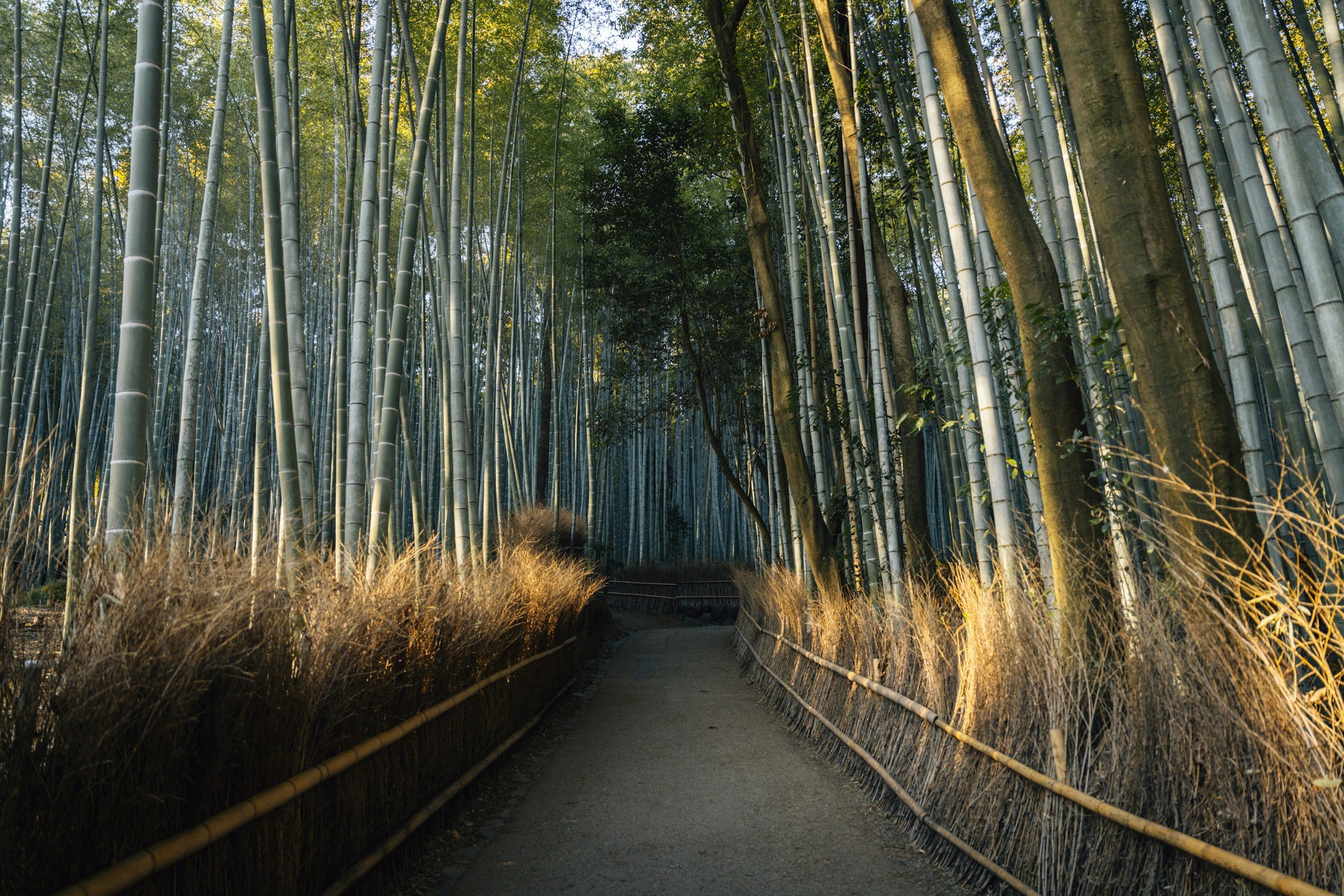
Arashiyama, Kyoto. The Japanese government has officially preserved the sound of this grove — the wind moving through bamboo — as one of the 100 Soundscapes of Japan worth protecting for future generations. A country that preserves the sound of a forest understands something about attention that most of the world has forgotten.
Japan has three philosophical concepts that, taken together, form a complete framework for living well under conditions of uncertainty, impermanence, and complexity.They are not abstract.
They are visible in the architecture, the food, the gardens, the art forms, and the daily rituals of the culture.
Wabi-sabi — the aesthetic of the imperfect, the impermanent, the incomplete. The understanding that a tea bowl with a crack in it is more beautiful than a flawless one, because the crack is evidence of a life lived. The autumn leaf is more beautiful than the summer leaf, because it is leaving.
Ma — the space between things. The pause in the music. The emptiness in the garden that gives the stone its weight. The silence before the tea is poured. Ma teaches that what is absent is as important as what is present — that the most significant thing in any composition is often the space you have chosen not to fill.
Kintsugi — the golden repair. The decision, after catastrophic loss, was to rebuild with more intention and more beauty than before. To make the damage visible. To wear the fracture as a distinction rather than hiding it as a flaw.
These are not concepts that require a philosophy degree to appreciate. They require only the willingness to slow down long enough to notice them — in the way a chef presents a single piece of fish, in the way a garden designer uses negative space, in the way a craftsman completes a task that no one will ever see the difficulty of.
Japan, experienced properly, is a master class in attention. And the experiences that make it extraordinary are, almost without exception, the ones that cannot be found in a guidebook.
What Japan offers at the highest level
Through my partnership with a specialist Japan DMC based in Tokyo — one of the few that can access experiences genuinely unavailable elsewhere — I am now able to offer clients a Japan that goes well beyond the celebrated and the obvious.
What follows is not a list of attractions. It is a portrait of what becomes possible when the right doors are opened.
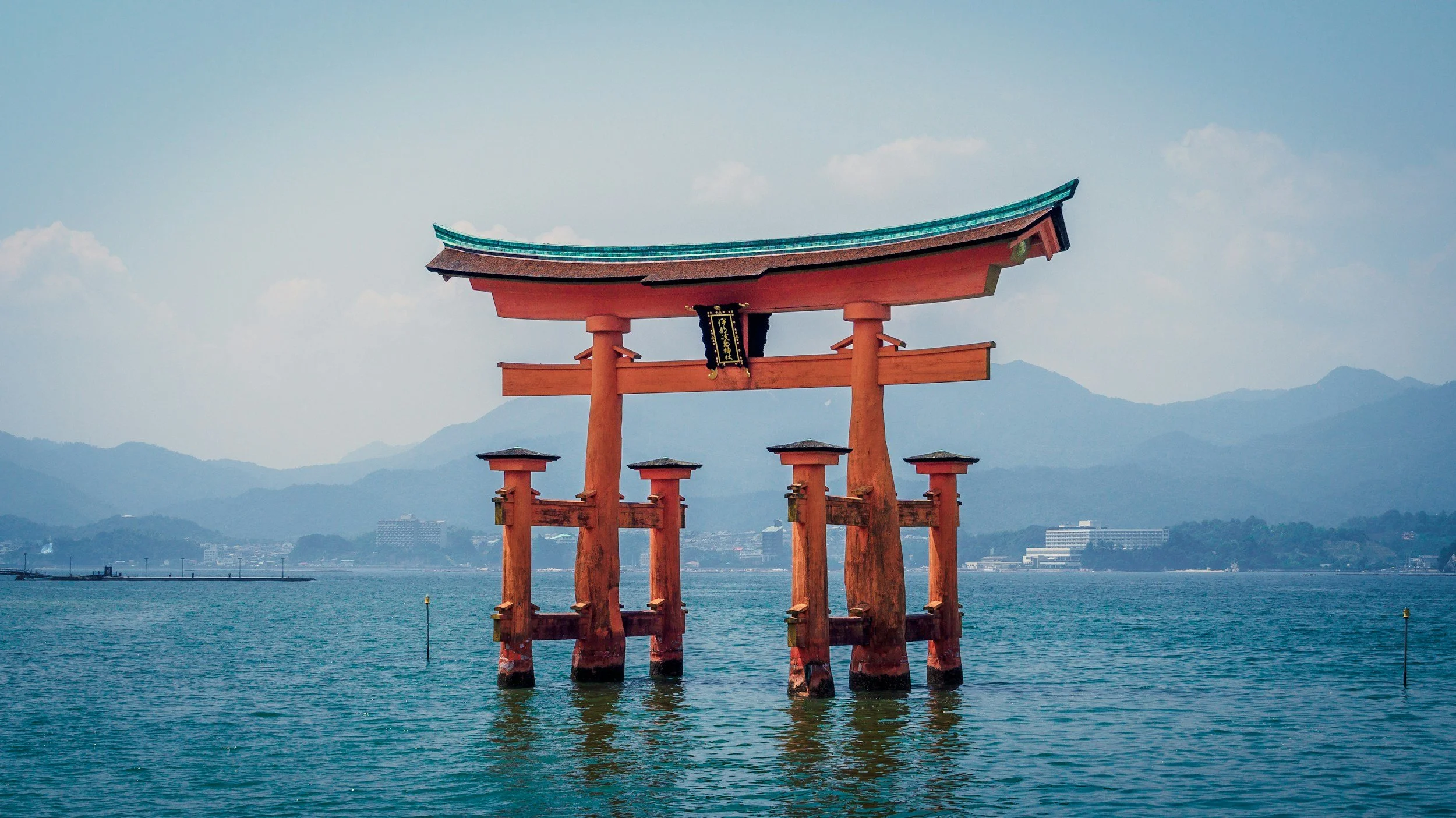
Itsukushima, Miyajima Island. The gate has stood in these waters since 593. It is supported by nothing but its own weight. Japan has always understood that the most enduring things do not need to be anchored — only perfectly placed.
01 — THE LUXURY TRAINS — JAPAN'S MOST COVETED JOURNEYS
Japan has three luxury sleeper trains that most travellers never board, not because they cannot afford to, but because access requires either extraordinary patience or extraordinary connections. Train Suite SHIKI-SHIMA, Seven Stars in Kyushu, and Twilight Express Mizukaze — each is, in its own way, a rolling philosophy of Japanese hospitality and design.
Ken Okuyama, the same designer behind Porsche, Ferrari, and Maserati, designed SHIKI-SHIMA. It carries just 34 passengers in 17 suites, through eastern Japan, including Tohoku and Hokkaido. The kaiseki menus were crafted by Japan's first Michelin-starred chef, Katsuhiro Nakamura. Glass-enclosed observation cars. Panoramic windows. A pace entirely outside of schedule.
Seven Stars in Kyushu moves through the island of Kyushu — Fukuoka, Oita, Miyazaki, Kagoshima, Kumamoto — in an exquisite blend of Japanese and Western design. The landscape changes hour by hour. The locals along the route come out to wave as it passes. It is the only train I know of where the journey itself is the destination.
Public lottery access to these trains takes six months to a year. We can arrange immediate last-minute availability for our clients.
02 — PRIVATE CULTURAL EXPERIENCES — WHAT CANNOT BE BOOKED ONLINE
The most significant experiences in Japan are not the ones that appear on booking platforms. They are the ones that require relationships, language, and the kind of patient groundwork that only a deeply embedded local team can provide.
Dinner at Nijo Castle, Kyoto. Built in 1603 by shogun Ieyasu Tokugawa. UNESCO World Heritage Site. Private dining in the Palace Kitchen, with traditional performances, while the Ninomaru Garden is illuminated outside your window. Not available to the general public.
Private Kabuki at Minamiza Theatre, Kyoto. Japan's oldest Kabuki theatre. An exclusive performance reserved for your group, with an aperitif and the rare opportunity to meet the performers before the show.
Kintsugi Workshop at Mutoh, Nihonbashi. A century-old crafts dealer in central Tokyo. A one-day workshop in the traditional art of gold repair — using lacquer and gold powder on prestigious Japanese ceramics. You leave with both a restored piece and a deeper understanding of why the Japanese have always believed that broken things, properly mended, are more beautiful than things that have never been tested.
Private Morning Sumo Practice. Not the tournament — the morning training session. The discipline, the ritual, the extraordinary physicality of wrestlers preparing for competition. A glimpse into the world behind the spectacle.
Tea Ceremony and Kaiseki at Genyadana Hamadaya, Tokyo. A Michelin three-star ryotei founded in 1912. A guided tour of the century-old building, followed by a mini kaiseki course. If desired, a geisha performance during the meal.
03 — CASTLE STAYS — SLEEPING INSIDE JAPANESE HISTORY
Japan has twelve original wooden castles remaining. Several of them can now be slept in — an experience so rare and so particular that guests who have done it describe it as one of the most disorienting and beautiful nights of their lives.
Ozu Castle, Ehime Prefecture. Nestled in the mountains, overlooking the Hiji River. Guests can participate as shadow warriors supporting the castle lord — an authentic immersion into Japan's feudal era. Meticulously preserved rooms. Traditional breakfast.
Fukuyama Castle, built in 1622 by the cousin of Tokugawa Ieyasu. Guests arrive in traditional lordly attire through the historic Sujigane Gomon Iron Gate, with ceremonial retainer calls. Optional: a private Noh performance by the Kitaryu Oshima Noh Theater.
Marugame Castle — one of Japan's twelve original wooden castles, over 400 years old. An exclusive stay within the castle walls, with a private night lounge experience in the keep, a rickshaw ride, and a taiko drum performance.
04 — UNIQUE STAYS — BEYOND THE LUXURY HOTEL
For clients who have stayed at the finest hotels in the world and are looking for something that cannot be replicated anywhere else:
Guntū — a floating ryokan on the Seto Inland Sea. Twenty suites. The ship moves through the islands at the pace of a conversation, stopping where the landscape demands it. The cuisine is crafted from the freshest local ingredients. The silence, in the right weather, is absolute.
Tenku No Mori, Kagoshima. Five private villas on 60 hectares, each with its own onsen, situated so far apart that guests have the entirety of the surrounding nature to themselves. The option to charter a private plane for an aerial view of the active Sakurajima volcano.
Maison Owl, Yamaguchi. A cave-like architectural marvel by Junya Ishigami — a home and French fine-dining restaurant built into the earth, with concrete arches and moss-lined courtyards. The entire property can be reserved for an overnight stay. There is nowhere else like it in the world.
Japan’s Hidden Gems
Embark on the only private jet journey devoted entirely to Japan, featuring a stay in Okinawa—a destination exclusive to our itinerary among luxury tour operators. Travel effortlessly between three distinct regions on direct flights aboard the private jet.
Travel in exceptional depth alongside on-trip experts Louisa McDonald, Ph.D., a renowned Japanese art historian specializing in Japanese visual culture from medieval scrolls to modern war art, and Alec Murphy, Ph.D., a leading geographer whose research explores the interplay of place, identity and environment. Together, they illuminate how geography and artistry define Japan’s cultural landscape.
Interested in Japan's Hidden Gems by TCS World Travel departing June 20? I have put together a complete experience guide — explore the journey here.
How to arrive in Japan properly
Japan rewards preparation. Not the preparation of a packed itinerary, but the preparation of intention — knowing what you are there to understand, and leaving enough space to be surprised by what you find.
The clients who leave Japan most transformed are not the ones who saw the most. They are the ones who stayed long enough in each place to feel it — who sat with the silence of a temple garden rather than photographing it, who asked the craftsman a second question, who ordered what the chef recommended rather than what they recognised.
Japan is not a country that reveals itself to speed. But to the traveller who arrives slowly, with curiosity and respect, it offers something that very few places on earth can match: the experience of encountering a culture that has been refining the art of living well for over a thousand years — and that is, still, entirely itself.
Japan is not a country that reveals itself to speed.
But to the traveller who arrives slowly, it offers something that very few places on earth can match.
If Japan is on your list — or if it has been on your list for years and the right moment has not yet arrived — I would be glad to begin the conversation. Through my new partnership with one of Japan's most exceptional specialist DMCs, I can now offer access to experiences that were previously unavailable through conventional luxury travel channels.
Describe how you want to feel. I will find the place.
JOURNEY WITH AURA VERA
-
34 passengers. 17 suites. Designed by Ken Okuyama. Kaiseki by Japan's first Michelin-starred chef.
Eastern Japan, Kyushu, or western Japan depending on the train.
Access arranged without the public lottery — immediate availability for Aura Vera clients.
-
Three of Japan's twelve original wooden castles. Private access, traditional attire, ceremonial arrivals, Noh performances, and the particular quality of silence that only a castle at night, with no other guests, can provide.
-
Twenty suites. The islands of the Seto Inland Sea at the pace the water demands.
Cuisine from the freshest local ingredients. The landscape changing hour by hour outside your window. A journey that understands silence as part of the itinerary.
-
Tokyo, the Maldives, Bali and Rajasthan. Twenty-four days aboard a dedicated Airbus A321 with 48 guests and a Four Seasons team in the air. From $167,000 per person. Japan is the first destination — and it sets the tone for everything that follows.
Questions & Answers
What I am most often asked about luxury travel in Japan.
Answers from a Virtuoso-affiliated advisor with exclusive Tokyo DMC access.