In the West, we are frightened of empty space.
We fill our calendars before they are empty. We keep our homes busy with background sound. We reach for our phones in the first seconds of silence, as if stillness were a problem to be solved rather than a condition to be inhabited.
Japan has a word for what we are afraid of. They call it Ma — 間. And for centuries, they have built their gardens, their music, their architecture, and their most profound philosophy around it.
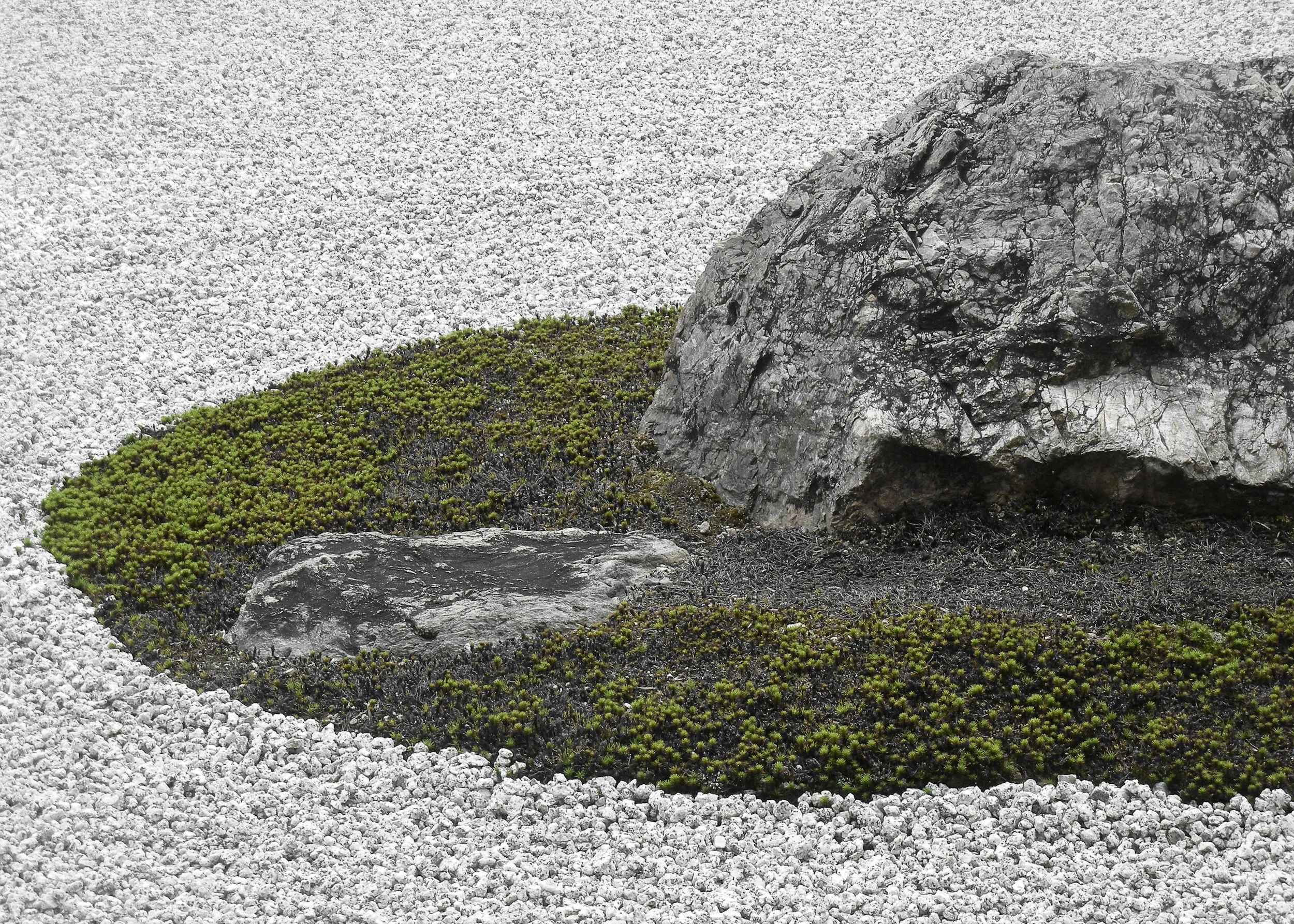
Ma is often translated as 'negative space,' but that translation misses almost everything. Ma is not absence. It is the meaningful interval — the pause that gives shape to what surrounds it. The silence between notes that makes the music intelligible. The empty courtyard of a temple that draws the eye to a single stone. The gap in a conversation that allows the other person's words to settle before you respond.
It is not nothingness. It is the space that holds possibility.
Ma is not the absence of something. It is the presence of everything that cannot be said.
I have been thinking about Ma for years — long before I built a travel advisory practice around it. I first encountered the concept during my years in ultra-luxury maritime hospitality, working aboard ships that moved through parts of the world where the sea itself seemed to practice it. The Arctic. The edges of Antarctica. The early mornings in open water when the horizon is so complete that the only thing left to do is think.
What I noticed, again and again, was that the passengers who arrived most desperate — the ones whose shoulders were up around their ears, who checked their phones until the last moment of embarkation — were almost always executives. Leaders. People who had built extraordinary lives by filling every available space with output.
And what I also noticed was that by day three, something shifted. Without quite knowing why, they began to slow down. They started leaving breakfast without checking the time. They sat at the bow and watched the water without narrating it for anyone. They began, in the most fundamental sense, to rest.
Japan does this more deliberately and more beautifully than anywhere else on earth.
What Ma actually looks like
The philosophy of Ma is not abstract. It is entirely physical. You encounter it the moment you arrive in Japan if you are paying attention.
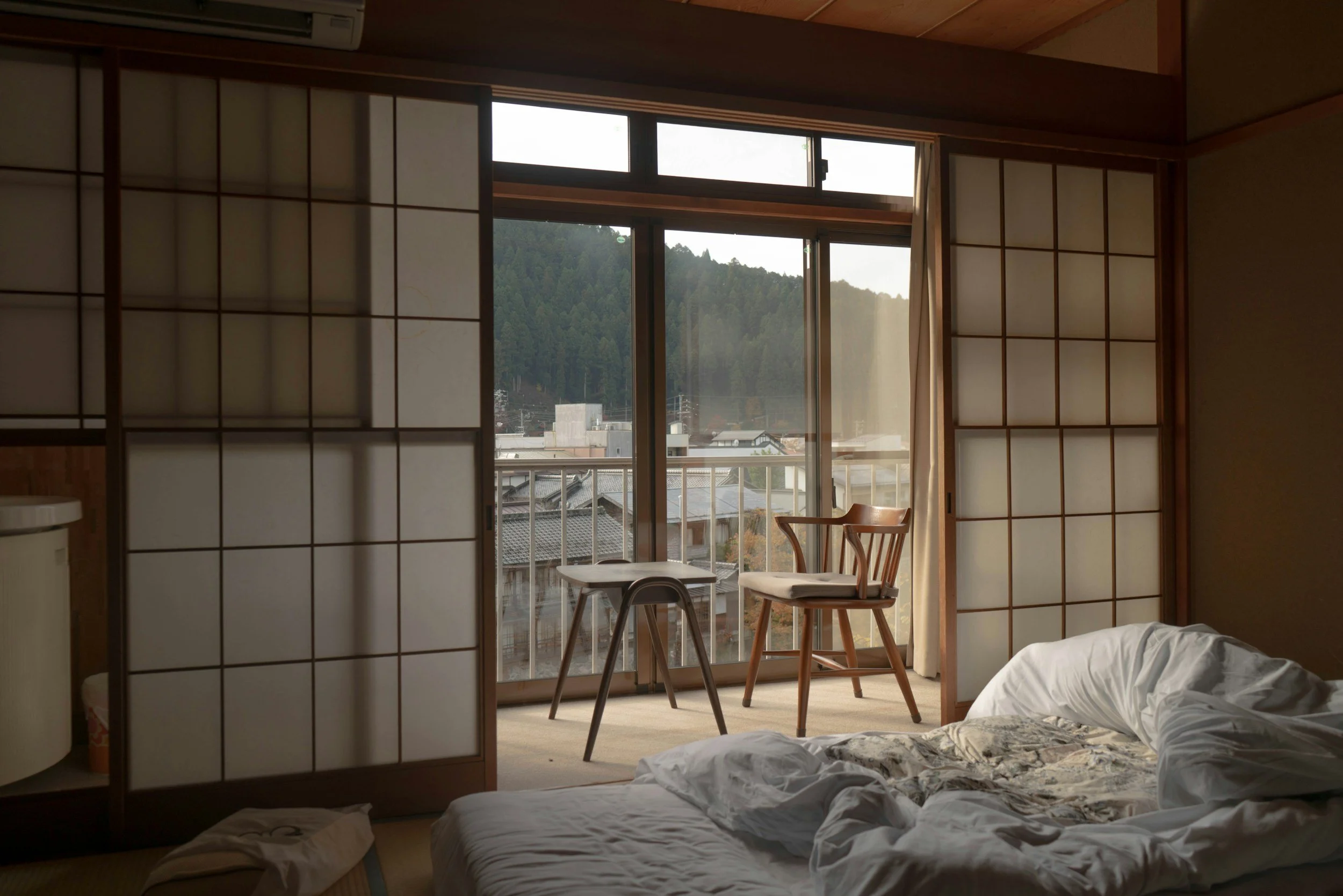
It is in the Genkan — the threshold at the entrance of a ryokan where you remove your shoes and, with them, your roles. You are not a CEO at the Genkan. You are not a founder or a managing director. You are a person entering a space that has been prepared for your presence.
It is in the Kaiseki meal, where each course arrives with silence and intention, where the interval between dishes is as carefully considered as the dishes themselves. The Japanese have understood something that most of the world's finest restaurants are only beginning to grasp: that the pause between experiences is not dead time. It is the time when the experience becomes memory.
It is in the Onsen — the thermal bath that is entered slowly, in silence, after a ritual of washing that is itself a form of transition. Not from dirty to clean. From one state of mind to another.
It is in the moss gardens of Kyoto's Saihoji Temple, where centuries of careful tending have produced a silence so complete that visitors speak in whispers without being asked to.
And it is in the bamboo forests of Arashiyama, where the sound of wind through ten thousand hollow stems creates something that is neither music nor silence but exists, precisely, in the space between them.
The Japanese do not decorate their spaces to fill them. They arrange them to reveal them.
When I advise clients on a journey to Japan, I am not primarily looking for famous landmarks or decorated hotels. I am looking for the places where Ma lives most quietly. The moss-lined paths that invite you to slow your stride. The ryokan corridors that smell of cedar and time. The sushi counter where a master chef works in total silence, and where the only appropriate response to a piece of aged toro is a pause before you speak.
These are the experiences that do not simply entertain. They recalibrate.
Why this matters for the high-output leader
There is a particular type of exhaustion that does not respond to sleep. Most leaders know it well. It is the exhaustion that comes not from physical depletion but from the relentless occupation of every available cognitive space — the background hum of decisions, responsibilities, and the perpetual management of other people's expectations.
Conventional holidays do not cure this. A week in Ibiza does not cure this. What cures it is an encounter with an environment that makes completely different demands on your attention — demands that require you to be present, slow, and receptive rather than fast, decisive, and productive.
Japan is the most effective environment I have encountered for this specific form of restoration.
Not because it is beautiful, although it is. Not because the food is extraordinary, although it is. But because it is a culture built on the practice of paying full attention to one thing at a time — and that practice, when you are immersed in it, is profoundly contagious.
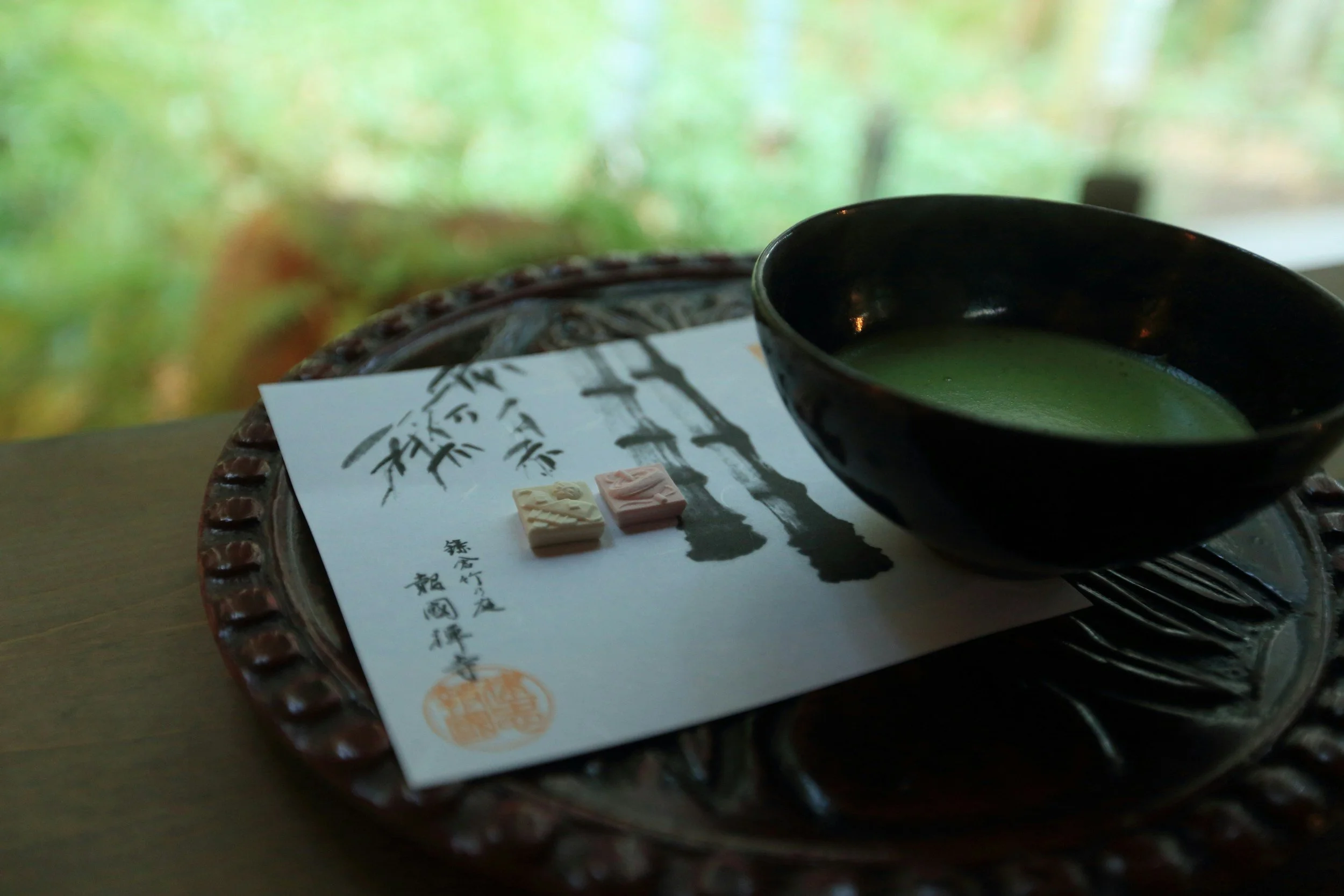
The tea ceremony is not interesting because of the tea. It is interesting because it is an hour-long exercise in noticing. The preparation of the bowl. The sound of water. The weight of the whisk. The temperature of the ceramic against your hands. Each sensation arrives separately, in its own interval of Ma, and the cumulative effect is not relaxation but something sharper and more useful: clarity.
Leaders who travel to Japan for the first time frequently describe a version of the same experience. They arrive expecting to be impressed. They leave feeling, unexpectedly, that something has been returned to them. A quality of attention. A capacity for stillness. The ability to sit with a single thought long enough to understand it.
We do not travel to Japan to see it. We travel to Japan to be seen by it — to have the noise stripped away until what remains is recognisably, unmistakably ourselves.
Three experiences where Ma lives most completely
When I advise on a Japan itinerary, these are the three encounters I consider essential — not for their prestige, but for their capacity to deliver the quality of presence that Ma requires.
01 — THE RYOKAN
A ryokan is not a hotel. It is an environment designed to slow the body down so that the mind can follow. The tatami floor, the futon prepared in silence at dusk, the private onsen filled at the temperature you specified without being asked again — every element of a ryokan is a form of Ma. A space between the life you left and the person you are capable of being.
The finest ryokans in Japan operate at a level of quiet service that most Western luxury properties have not approached. Not because they have more staff, but because the philosophy behind the service is different. The goal is not to anticipate your needs. It is to make the environment so considered that needs simply do not arise.
02 — THE PRIVATE SUSHI COUNTER
There are sushi counters in Tokyo that seat eight people and require a personal introduction to enter. They are not famous for exclusivity. They are famous for what happens at the counter — an experience of such complete sensory focus that the outside world becomes genuinely irrelevant for two hours.
Chef Takashi Saito at Sushi Saito in Akasaka has described his work as the practice of subtraction — removing everything from the fish and rice until only the essential remains. To eat at his counter is to participate in a philosophy. The Ma between each piece of nigiri is not silence. It is the space in which the previous taste becomes experience.
03 — THE SAMURAI DOJO
Tetsuro Shimaguchi — the choreographer behind the sword sequences in Kill Bill — teaches in a dojo in Kyoto. What he teaches is not sword technique. What he teaches is the physical art of committing completely to a single action.
The first lesson is not movement. It is stillness. You learn to stand before you learn to cut, because the cut is only as precise as the mind that precedes it. For a leader accustomed to making twenty decisions before lunch, this is not merely interesting. It is confronting. And then, quietly, it is liberating.
How to find Ma in a Japan itinerary
Japan rewards slowness more than any destination I know. The instinct — particularly for high-achieving travellers — is to fill an itinerary. To see Kyoto and Tokyo and Osaka and Hiroshima in ten days, collecting temples like meetings.
This is the opposite of Ma.
The itineraries I advise on for Japan are built around depth rather than breadth. Two days in a single neighbourhood of Kyoto. An entire morning at one garden. A dinner reservation at a counter where the only decision you will make is whether to have tea or sake with the final course.
The question I ask every client before we discuss a single hotel or destination is not 'Where would you like to go?' It is: 'How do you want to feel on the flight home?'
For most leaders who come to me with Japan in mind, the answer is some version of the same thing. Quiet. Clear. Returned to themselves.
That is not a travel itinerary. That is a prescription. And Japan — more than anywhere I have ever been — has the capacity to fill it.