
Kintsugi Leadership: What broken pottery teaches us about resilience, beauty, and the value of the fracture
Kintsugi Leadership
What broken pottery teaches us about resilience, beauty, and the value of the fracture
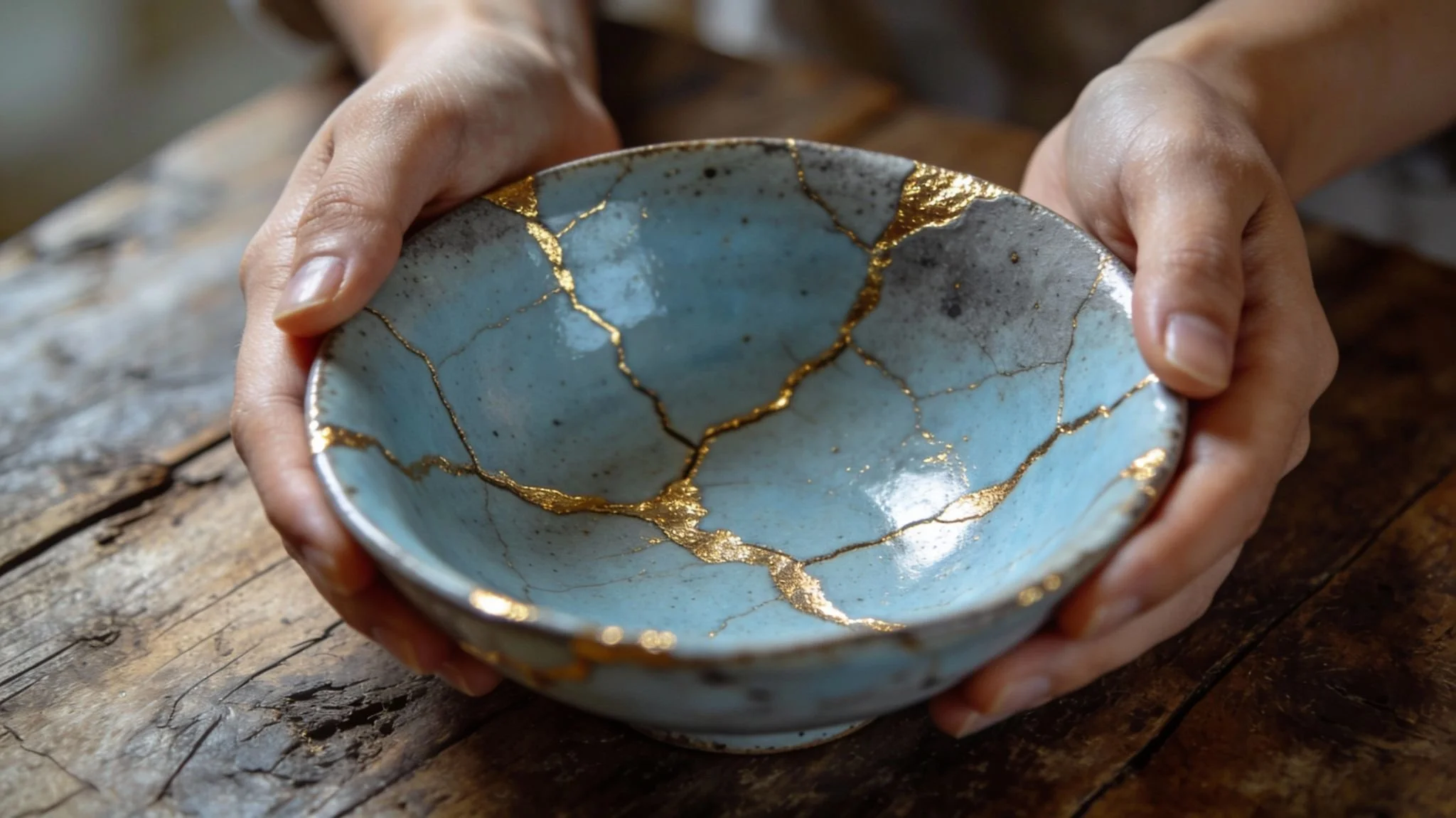
In the fifteenth century, a Japanese shogun sent a cracked Chinese tea bowl to China for repair. It came back held together with ugly metal staples.
The shogun was displeased. He asked his craftsmen to find a more beautiful solution. What they developed — filling the fractures with lacquer mixed with powdered gold — gave the bowl not just a repair, but a transformation. The cracks, now traced in gold, became the most beautiful thing about it.
Kintsugi — golden joinery — is now one of Japan's most celebrated art forms. But it is also one of its most profound philosophies. The principle is elegantly simple: an object that has been broken and repaired is not diminished by its history. It is deepened by it. The fracture is not a flaw to be hidden. It is the record of a life lived — and the gold that fills it is the evidence of survival.
I have been thinking about Kintsugi for years. Not as an aesthetic preference, but as a framework for understanding what I see in the clients I advise and, more personally, in the journey that brought me to this work.
The fracture is not a flaw to be hidden. It is the record of a life lived — and the gold that fills it is evidence of survival.
In the West, we treat setbacks as problems to be solved and then concealed. We polish our professional narratives until the difficult passages are invisible — the failed venture, the health crisis, the relationship that cost us years, the decision we still wake up thinking about at 3 am. We present the highlight reel and call it an identity.
The Japanese approach is the inverse. The break is where the story becomes interesting. The repair is where the character reveals itself. And the gold — the deliberate, beautiful act of acknowledging what was broken — is what transforms damage into distinction.
The leadership application
Leadership at the highest level is a contact sport with reality. The executives and founders I work with have, without exception, sustained significant fractures — businesses that nearly failed, teams that broke apart, health crises that forced reckonings they were not ready for, periods of such sustained pressure that the person who emerged from the other side was recognisably different from the one who entered.
The ones who navigate these passages most effectively are not the ones who recovered fastest or who resumed normal output soonest. They are the ones who allowed the experience to change them — who found the gold in the fracture rather than simply patching it and moving on.
This is what Kintsugi teaches, applied to life. The setback is not the interruption of your story. It is often the beginning of the most important chapter.
We do not travel to Japan to see perfection.
We travel to encounter a culture that has always known perfection is not the point.
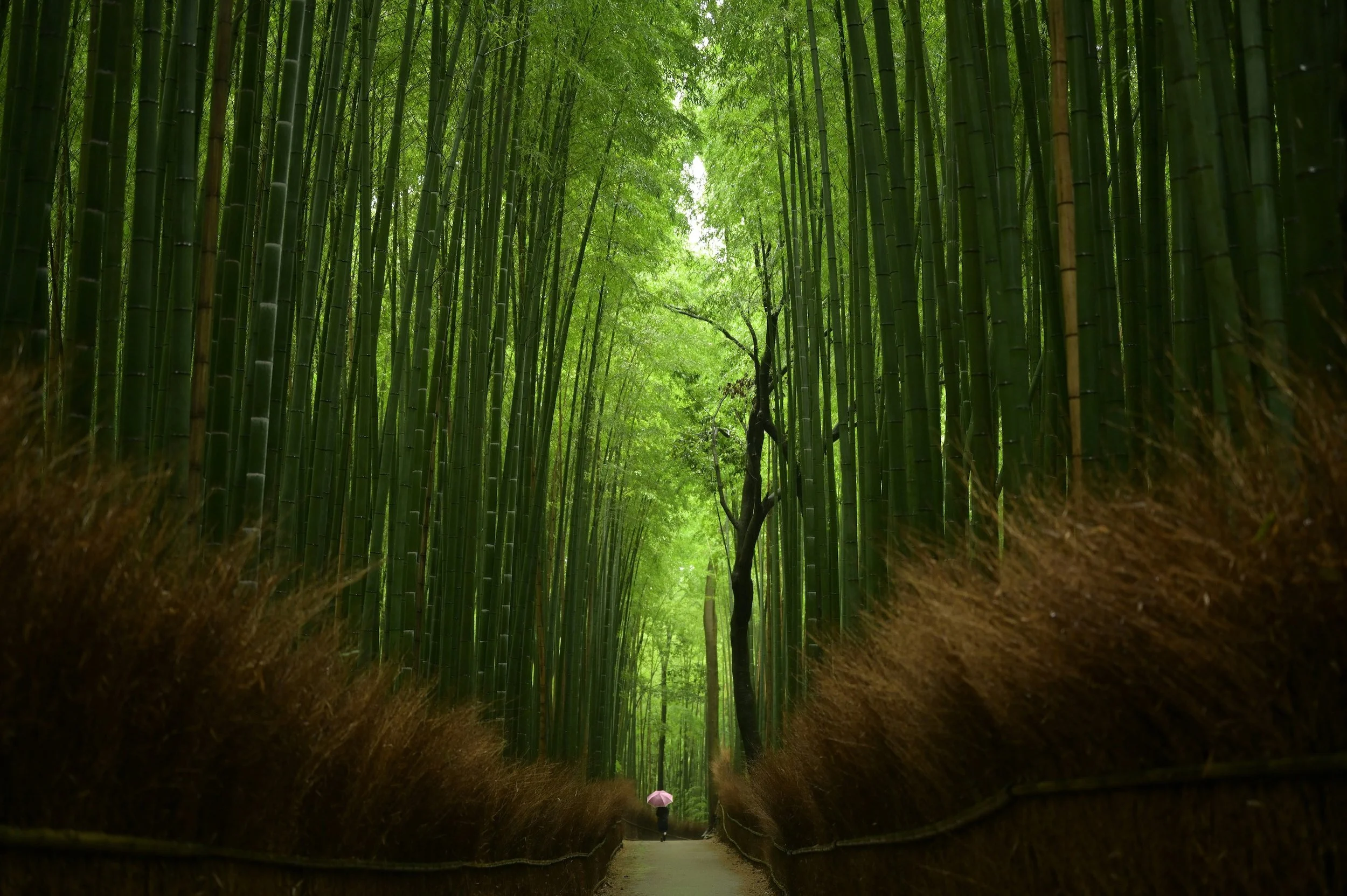
There is a reason that so many of my clients who travel to Japan describe the experience as one of the most significant of their professional lives — not because of the beauty, which is extraordinary, but because Japan is a culture that has spent centuries developing a sophisticated relationship with impermanence, imperfection, and the passage of time.
Wabi-sabi — the aesthetic of the incomplete, the impermanent, and the imperfect. Ma — the meaningful space between things. Kintsugi — the beauty of the repaired break. These are not decorative philosophies. They are practical frameworks for living well under conditions of uncertainty — which is to say, they are frameworks for leadership.
Three places in Japan where Kintsugi philosophy lives
When I chose a Japan itinerary, I look for places where this philosophy is physically present — where the environment itself teaches what the concept can only describe.
01 — KINKAKU-JI, KYOTO
The Golden Pavilion is one of Japan's most visited sites and one of its most misunderstood. Most visitors see a beautiful building covered in gold leaf. What they are actually seeing is a monument to deliberate reconstruction.
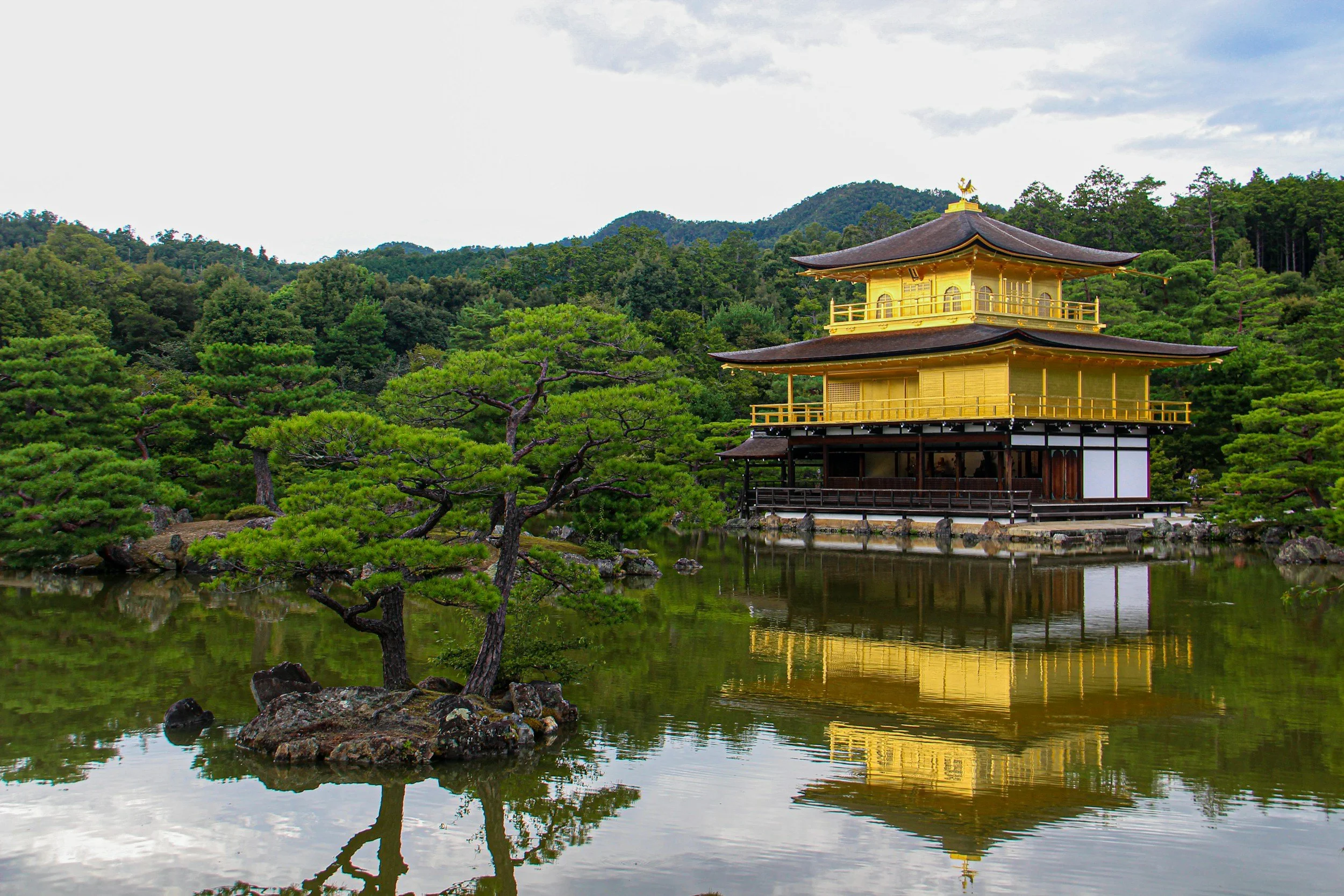
In 1950, a young monk burned the original pavilion to the ground. Rather than simply restoring what had been lost, the Japanese rebuilt it — and in rebuilding, amplified it. The top two stories were covered in pure gold leaf, more lavish than the original. The destruction became the catalyst for something more magnificent than what preceded it.
Kinkaku-ji is not a story about beauty. It is a story about the decision, after catastrophic loss, to build back with more intention — and more gold — than before.
02 — NAOSHIMA ISLAND
In 1987, Soichiro Fukutake returned to a cluster of islands in the Seto Inland Sea that were declining into irrelevance — depopulating, industrially exhausted, architecturally forgotten. He saw not ruin but possibility. His response was Benesse Art Site Naoshima — one of the world's most extraordinary examples of cultural regeneration.
Tadao Ando's Chichu Art Museum was built almost entirely underground to preserve the natural landscape. Ryue Nishizawa's Teshima Art Museum, where the only exhibits are wind, water, and the sound of the sea. Installations in abandoned houses. Contemporary art in fishing villages.
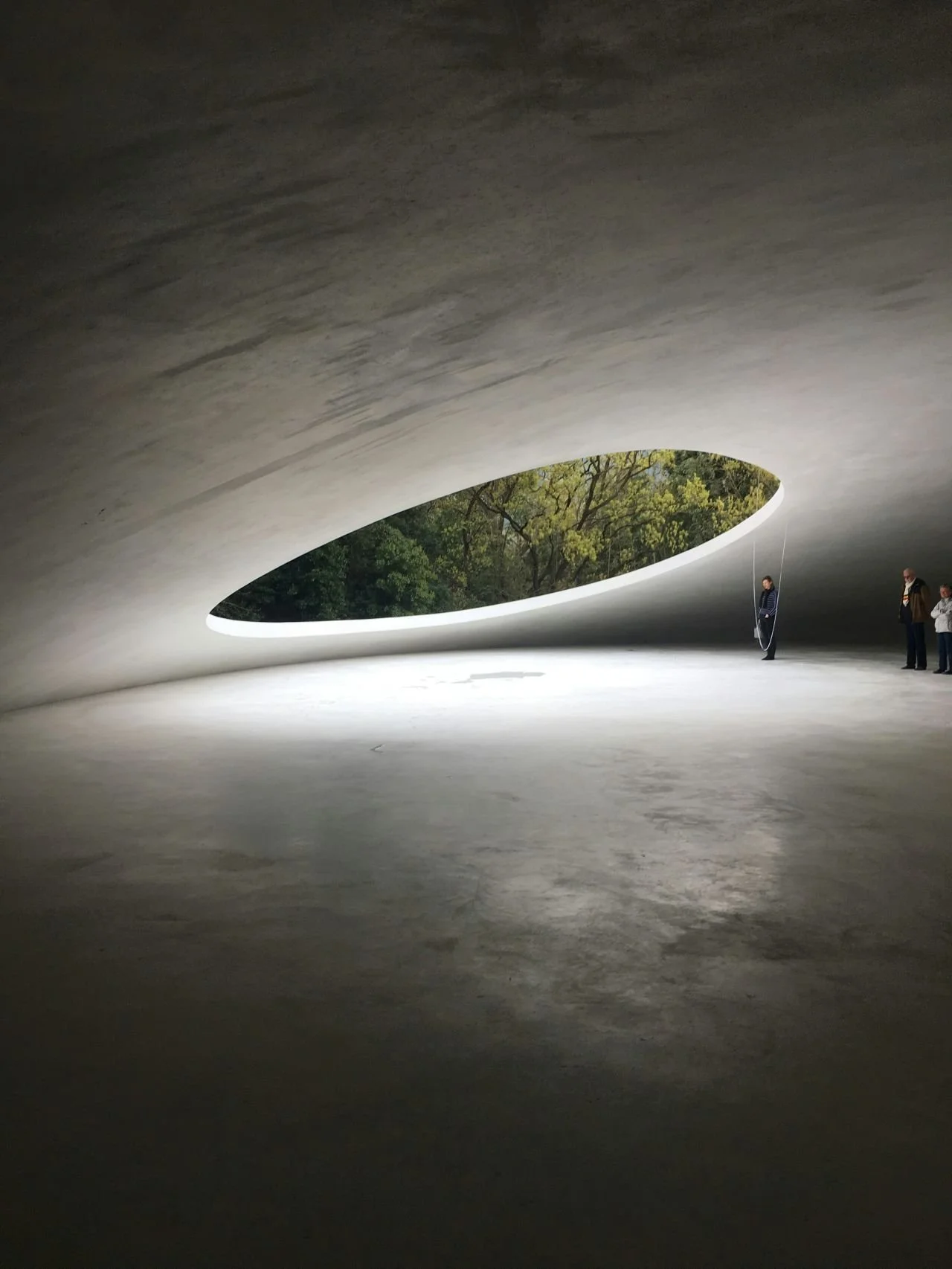
Image: Denis Kovalev
Naoshima is Kintsugi at the scale of an island — a place that was broken, repaired with intention, and is now more beautiful and more significant than it was before.
03 — THE SAMURAI DOJO, KYOTO
Tetsuro Shimaguchi — the choreographer behind the sword sequences in Kill Bill — teaches in a dojo in Kyoto. What he teaches, at its core, is the philosophy of total commitment to a single action.
The cut, he explains, is only as precise as the mind behind it. A fractured mind produces a fractured cut. The practice of Iaido — the art of drawing and cutting in a single movement — is the physical discipline of resolving internal contradiction before it manifests as external failure.
For leaders who have spent years managing the gap between their public confidence and their private uncertainty, an afternoon in this dojo is frequently one of the most clarifying experiences of their lives.
The question Kintsugi asks of you
There is a question I sometimes ask clients who are considering a journey to Japan, particularly those who have recently navigated a significant difficulty — a business restructure, a health event, a transition between chapters of their life:
Where is the gold in your fracture?
Not where is the damage, or how quickly can you recover, or what does the break say about your judgment? But: what did this experience give you that you could not have acquired any other way? What quality of perception, what depth of understanding, what particular kind of wisdom is now yours specifically because of what you went through?
This is not a question that requires Japan to answer. But Japan — more than almost anywhere I have ever been — creates the conditions in which it can be asked seriously, sat with patiently, and answered honestly.
The culture has spent centuries making peace with impermanence. The landscape has been shaped by forces — volcanic, seismic, seasonal — that make human constructions feel provisional and, for that reason, precious. The aesthetic, from the tea ceremony to the temple garden to the sushi counter, is one of refined attention to what is actually present, rather than anxious pursuit of what might be achieved.
In that environment, something shifts. The fractures become visible. And with them, the gold.
JOURNEY WITH AURA VERA
-
Tokyo · Kyoto · Naoshima · Hakone. Private jet access, Kinkaku-ji after hours, a private Kintsugi workshop, and a session at Shimaguchi's dojo.
Designed for those who wish to experience Japan at the depth it deserves — without the compromise of a schedule that belongs to someone else.
-
Osaka · Hiroshima · Naoshima · Kyoto. Board in Osaka and move through the Seto Inland Sea at the pace the islands demand.
Naoshima by private tender.
Hiroshima with a private guide. A journey that understands silence as part of the itinerary.
-
Tokyo · Hakone · Kyoto · Kanazawa. Private ryokan stays, onsen mornings, and the particular quality of stillness that only comes from sleeping inside a culture rather than visiting it. The pace of a journey that has nowhere else to be.
“Describe the feeling. I will find the place.”