
The Shadow That Rewrote the World
Total solar eclipses are coming to Spain in 2026, Egypt in 2027, and Australia in 2028. The history that made them matter — and how to choose where you stand.
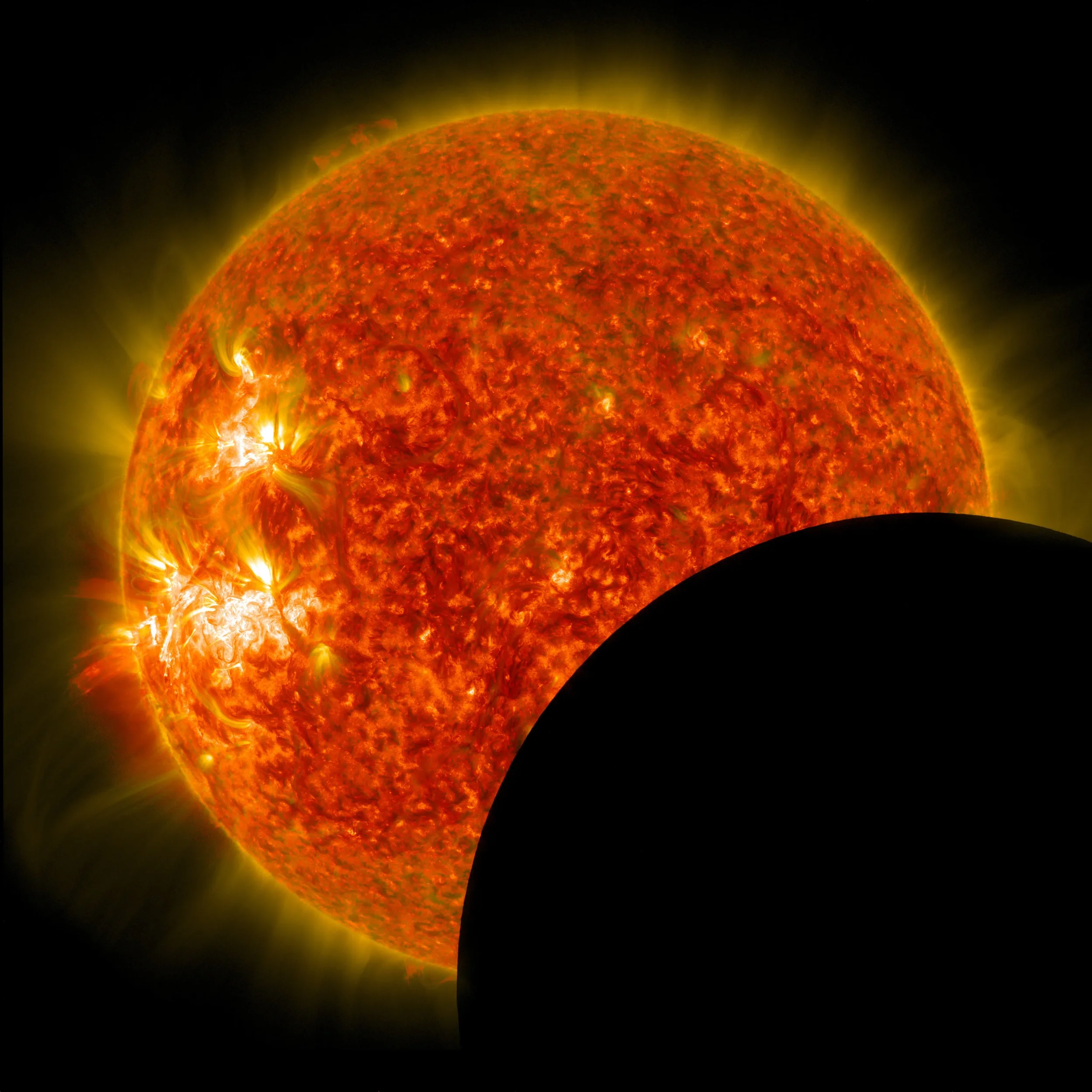
Credit:The Moon crosses the Sun. Image: NASA/SDO (2017).
For most of human history, a darkening sun meant the end of the world.
Then a handful of civilisations did something extraordinary. With no telescopes, no understanding of gravity, nothing but patience measured in generations, they cracked the rhythm of the heavens — and turned the most terrifying sight in the sky into the most precise appointment humanity had ever kept.
For three thousand years, we have chased the shadow
Babylon, eighth century BCE. Chaldean astronomers pressed their nightly observations into wet clay, tablet after tablet, for centuries without pause. Out of that ocean of data, a pattern surfaced: the Saros cycle. The same alignment of Earth, Sun, and Moon, they realised, repeats every 223 lunar months — roughly eighteen years, eleven days, and eight hours. Those extra eight hours meant the Earth turned a third further on its axis before the next eclipse arrived, so the shadow fell on a different part of the world. The Babylonians could predict an eclipse precisely — and know they would never see it.
The eclipse that stopped a war. Borrowing, most likely, from Babylonian records, the Greek philosopher Thales of Miletus is credited with the first eclipse prediction in Western history. According to Herodotus, it fell on 28 May 585 BCE, in the sixth year of a brutal war between the Lydians and the Medes. As the armies met in battle, the sky went black in the middle of the day. Both sides were so shaken that they laid down their weapons on the spot and made a peace that held. A shadow did what diplomats could not.
The first computer. By roughly 150 BCE, Greek engineers had built the rhythm into bronze. The Antikythera mechanism — an analog computer of precisely cut gears — let a user turn a hand crank and fast-forward the sky. One dial on the back was devoted entirely to the Saros cycle, with tiny glyphs indicating whether the next eclipse would be solar or lunar and at what hour. Two thousand years before the microchip, someone had put the heavens in a wooden box.
And, an ocean away, the same answer. The Maya daykeepers, with no contact whatsoever with Eurasia, arrived at the identical mathematics. The Dresden Codex preserves its eclipse tables — overlapping intervals of 177 days, corrected by hand over generations — accurate enough to flag the world's eclipse "danger windows." Two civilisations, oceans apart, read the same sky and reached the same truth.
For three thousand years, predicting the shadow was the summit of human knowledge. And then, once, the shadow returned the favour.
1919. A young German physicist had proposed something heretical: that gravity is not a pull, but a bend — that massive objects warp the very fabric of space and time, and that even light must follow the curve. Newton had reigned for two centuries; under his physics, light, being massless, should travel perfectly straight. Einstein predicted that the Sun's gravity would deflect the light of a distant star by 1.75 arcseconds — twice what Newton allowed. There was only one way to test it: you cannot see a star beside the Sun in daylight, unless the Sun is hidden. On 29 May 1919, the astronomer Arthur Eddington carried his cameras to the island of Príncipe, off West Africa, while a second team sailed to Sobral in Brazil. They photographed the stars around the blackened Sun — and found them shifted outward by very nearly the exact amount Einstein had foreseen. The Times of London announced it the way you announce an earthquake: "Revolution in Science. Newtonian Ideas Overthrown." In two minutes of darkness, our picture of the universe changed forever.
This is what an eclipse has always done. It has ended wars, built the first computer, and rewritten the laws of reality.
mainland Europe
(Luxor, 2027)
length is beaten
three years
You cannot buy an eclipse. Only your position.
Here is the part the ancients would have envied us for: we no longer have to predict it. We only have to decide where to stand.
And that is the whole truth of eclipse travel. An eclipse cannot be bought — not the suite, not the upgrade, not the favour called in at the last moment. It happens on its own terms, for roughly two minutes, whether or not you are ready. The only thing money secures is your position: where you are standing, beneath which sky, when the world goes dark.
That decision is coming three times in the next three years. Three eclipses — and three entirely different ways to meet them.
2026 — when the shadow comes to Spain
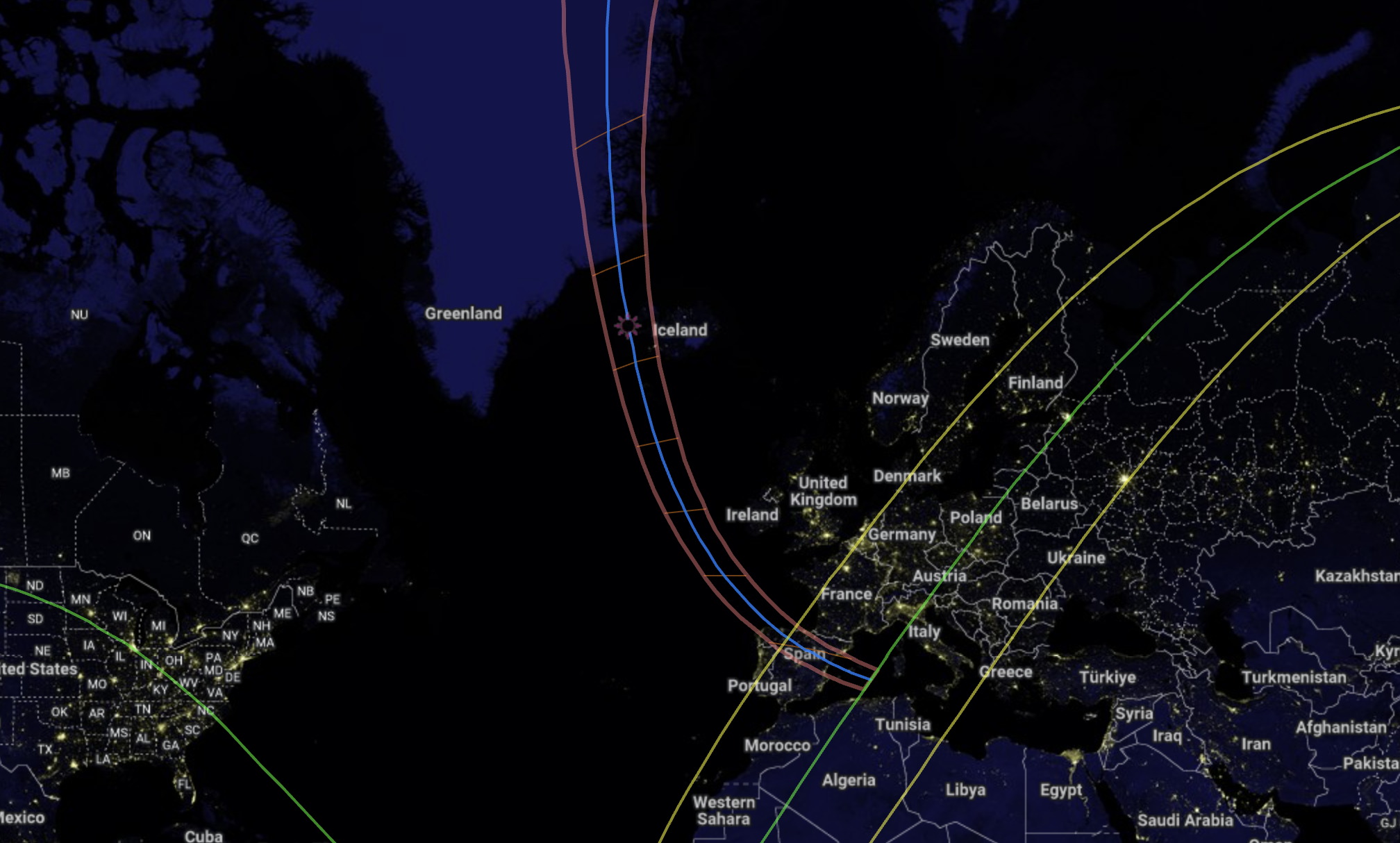
Credit: Path of totality, 12 August 2026. Map: eclipse path data.
On 12 August 2026, the path of totality crosses northern Spain — A Coruña, Bilbao, Zaragoza, Valencia — and the Balearic Islands. It is the first total eclipse over mainland Europe since 1999. Madrid and Barcelona fall just outside the line, which is the quiet cruelty of eclipses: a few kilometres is the difference between a deep dusk and the real thing.
From my own window in Palma, totality will arrive in the evening, the Sun low over the Mediterranean. There is something disorienting about knowing that people will cross the planet to stand where I already live — and it is precisely that geography that makes 2026 the most reachable of the three.
For those who want to meet it on the water, two very different ships sit beneath the same sky.
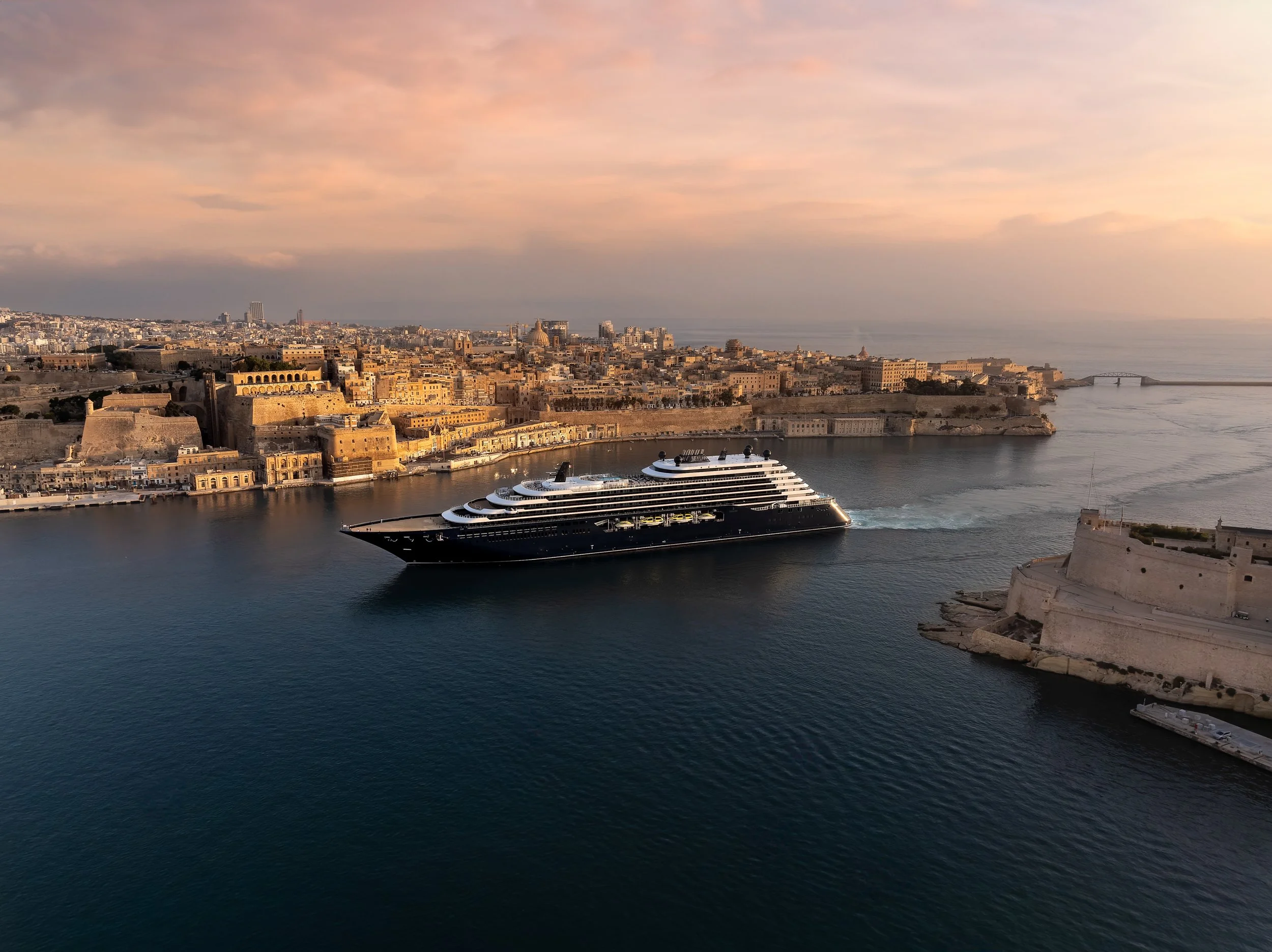
Credit:Ilma in the Western Mediterranean. Image: The Ritz-Carlton Yacht Collection.
The Ritz-Carlton Yacht Collection has deliberately placed Ilma in the path — departing Monte Carlo on 7 August and timed to pass over the Balearics on the 12th, the eclipse watched from a private terrace with an open horizon and none of the roadside crowds.
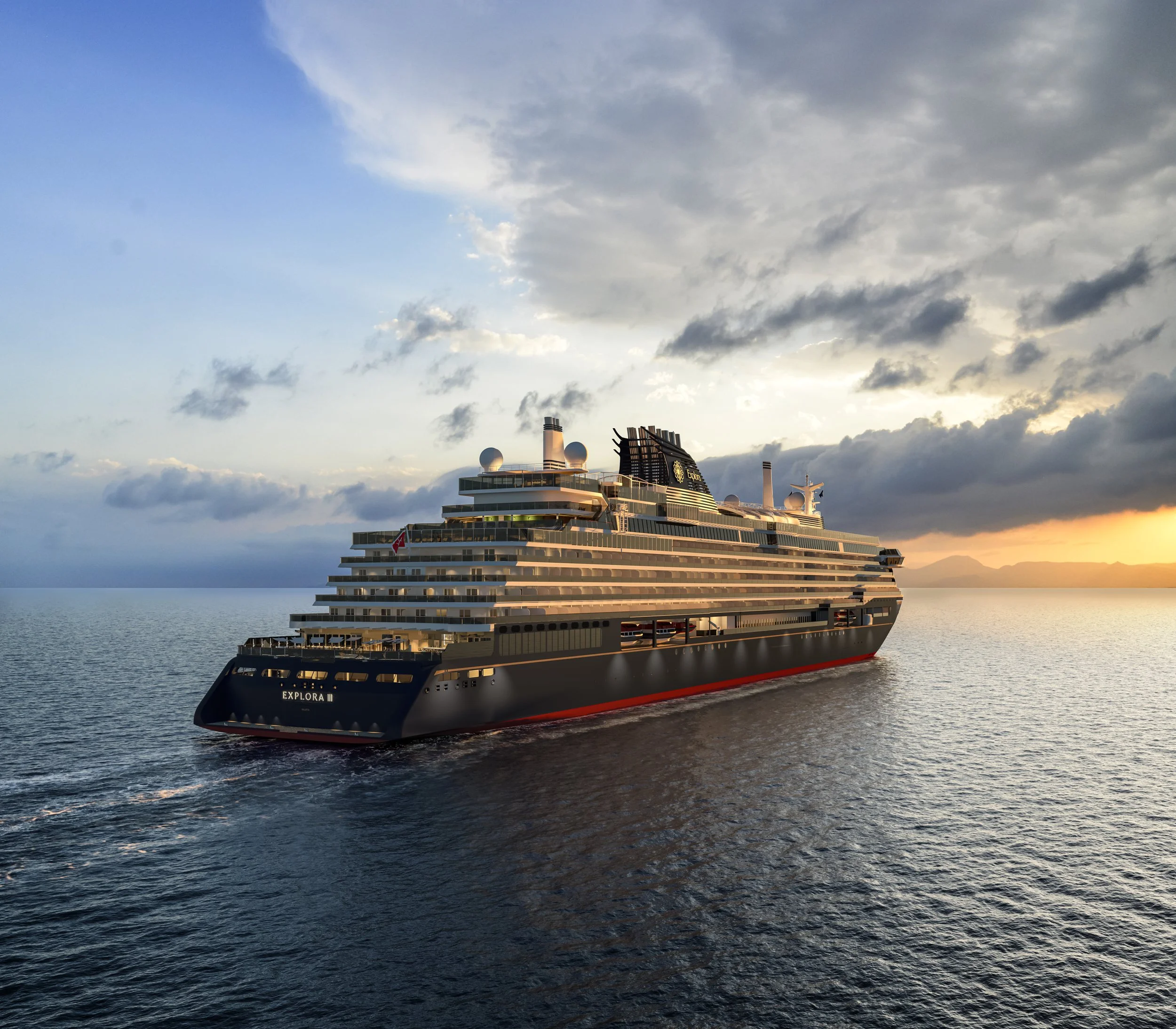
Credit: Explora III. Image: Explora Journeys
Explora Journeys offers the quieter, less obvious route. Explora III's Iberian sailing is not sold as an eclipse voyage at all — yet on 12 August the ship calls at A Coruña, squarely inside the path, and sails west into the Atlantic as the light begins to fail. The same celestial event, without the premium attached to its name.
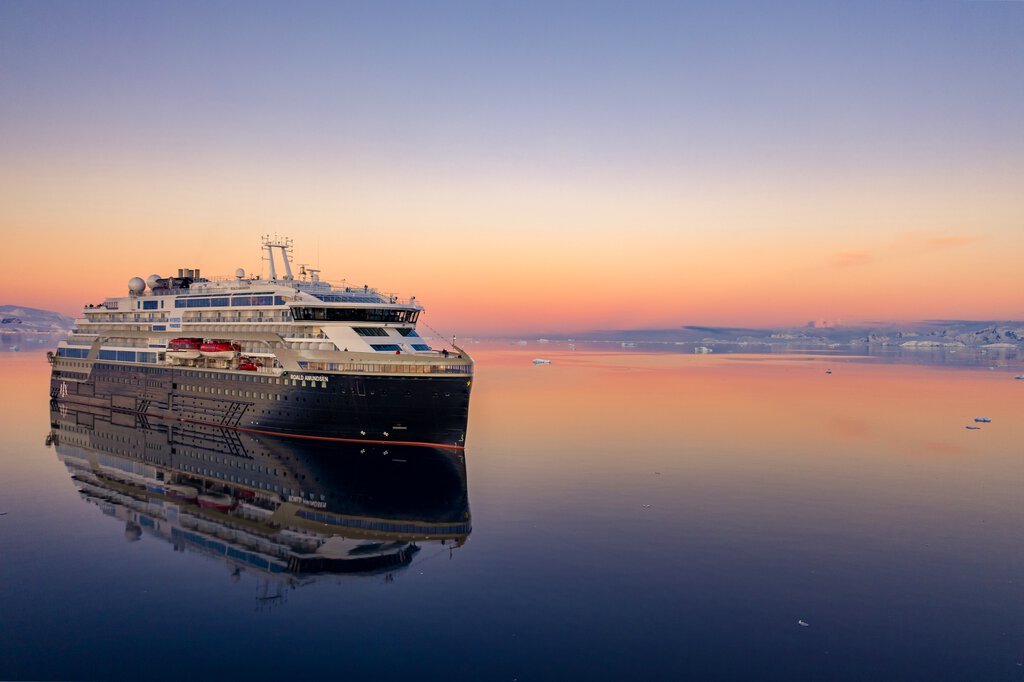
Credit: HX in the high Arctic. Image: HX.
Far to the north, the same eclipse turns Arctic. HX takes its expedition fleet into Scoresby Sund — the largest fjord system on Earth — to witness totality from East Greenland in the late afternoon, with solar experts aboard and 130 years of expedition heritage behind the line. Having sold polar voyages for years before I ever stood on the ice myself, I can tell you the draw is never the eclipse alone; it is the silence of a place where icebergs drift in mirror-still water, and the Moon's shadow crosses a landscape almost no one will ever see.
One honest caveat, because candour serves you better than enthusiasm here: the cloud record favours the land of Spain and the Balearics over the open North Atlantic. The sea gives you mobility and an unobstructed horizon; it does not promise you a clear sky. Both things are true at once, and choosing between them is exactly the kind of judgment an advisor exists to make with you.
2027 — the eclipse of the century
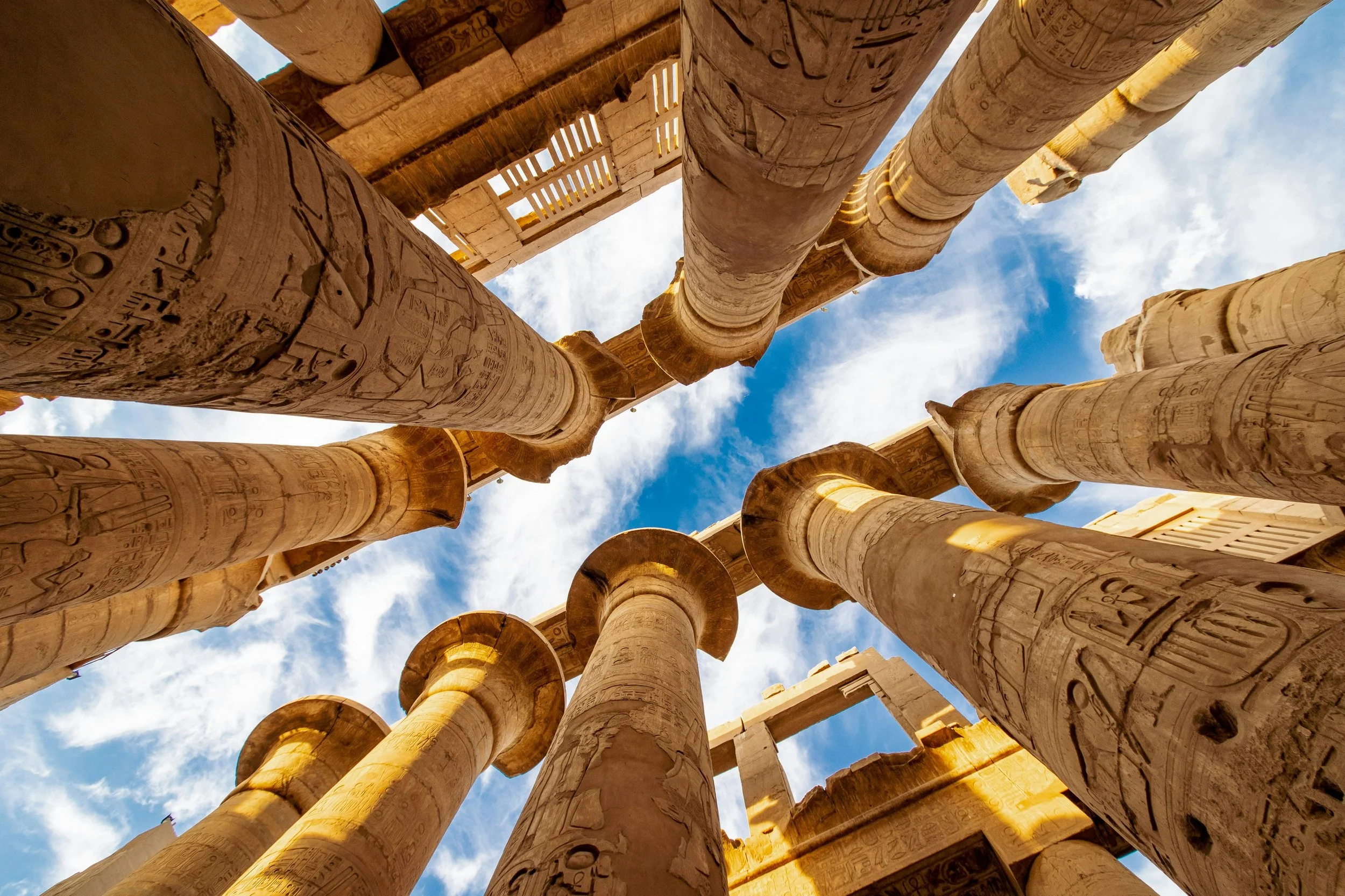
Credit: Karnak, Luxor. Image: licensed.
If 2026 is the eclipse on Europe's doorstep, 2027 is the one history will remember. On 2 August 2027, totality over Luxor lasts six minutes and twenty-three seconds — the longest until the year 2114. Nothing in our lifetimes will come close.
The most quietly remarkable way to meet it is not a ship at all, and not a journey you will stumble across with a search bar. Twelve guests. Private air — an Embraer Legacy or similar, with business-class seating, a single dedicated flight attendant, and the short desert hops handled in comfort, so that almost none of the day is lost to transit and almost all of it is spent on the ground. A dedicated guest services manager prepares every detail before departure; a veteran expedition leader travels the whole route at your side; and a working astronomer — a lifelong eclipse-chaser — flies with the group as resident expert, turning six minutes of darkness into something you understand rather than merely witness.
The journey itself reads like the index of a civilisation: the pyramids of Giza, the Valley of the Kings, the temples of Karnak, a newly built Nile vessel of just eight suites sailing for the group alone, the colossi of Abu Simbel, and finally Alexandria on the Mediterranean. One practical truth separates a transcendent six minutes from an endured one: Luxor in early August runs past 40°C, so the considered version of this journey keeps shade and stillness always within reach.
2028 — for the patient, the Kimberley
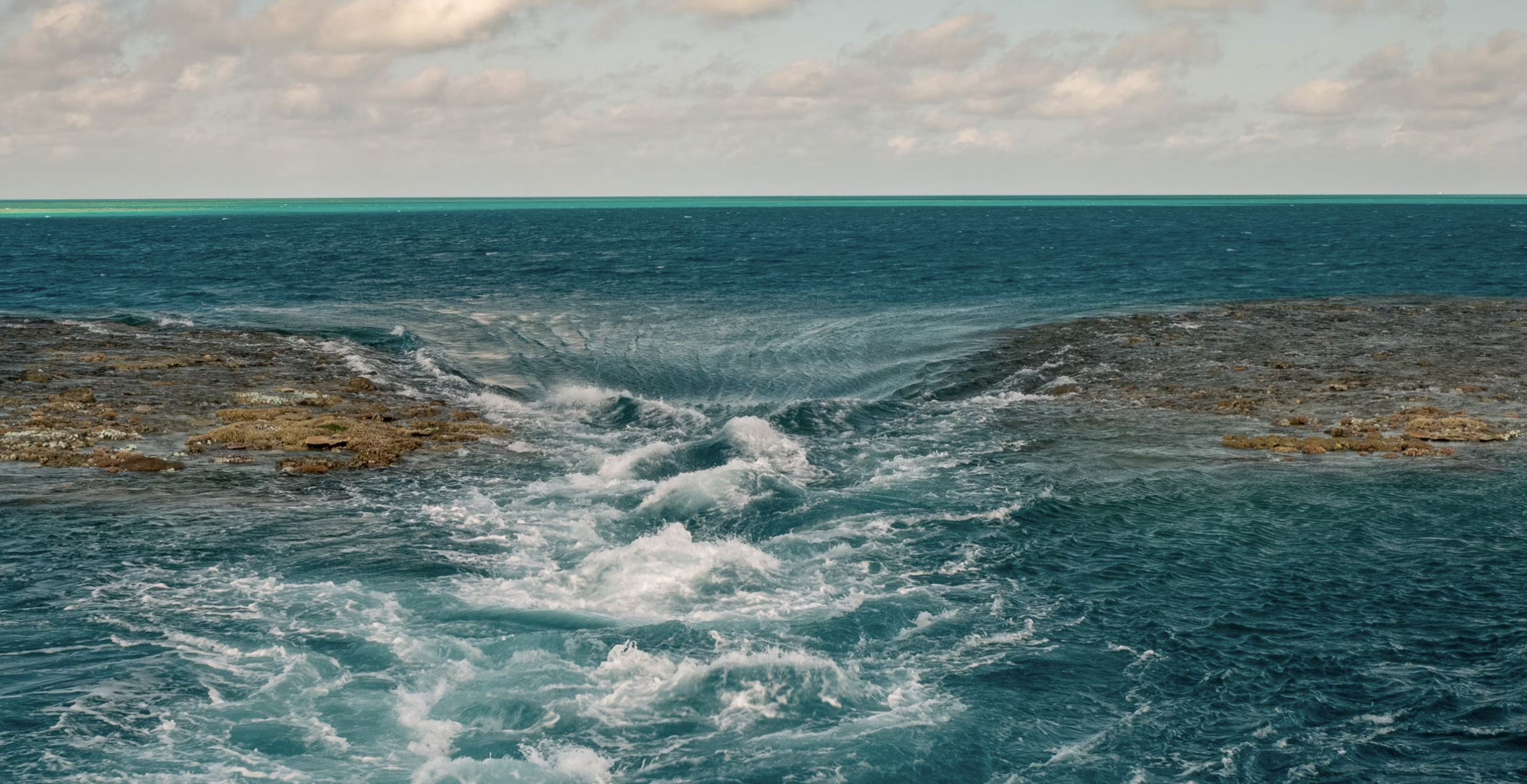
Credit: The Kimberley coast, Western Australia. Image: licensed.
And for those who plan their wonder years: 22 July 2028, off the coast of Western Australia. PONANT sails the Kimberley from Darwin to Broome with Smithsonian Journeys, and on the morning of the 22nd, positions in the Bonaparte Archipelago, within fifty miles of the point of greatest duration — over five minutes of totality above one of the last great wildernesses on Earth, where the rock art on the cliffs is older than twelve thousand years. It is three years away. That is exactly why the people who see the most extraordinary eclipses are the ones who decide early.
How to choose where to stand
Three eclipses. Water, desert, ice. Two minutes off Galicia, six over the Nile, five above the Kimberley. The destinations could not be more different, and the right one depends less on the eclipse than on you. A few honest principles guide the choice:
Decide by climate, not just by calendar. For 2026, the open North Atlantic gives drama and an unobstructed horizon, but it withholds its skies more often than the Spanish mainland and the Balearics do. For 2027, the Egyptian desert offers some of the most dependable clear-sky odds anywhere on the path — the reason it draws the most serious eclipse-chasers in the world.
A ship buys you mobility; that is its quiet advantage. Cloud over your position on the morning of an eclipse is the one risk you cannot fully plan away — and a captain who can move is a captain who can chase a gap in the weather. It is the single strongest argument for meeting an eclipse at sea.
Position is everything, and the best positions are finite. The terraces, the twelve-guest cabins, the sailings timed to the exact line of totality — these do not scale. The travellers who witness the rarest of these eclipses are simply the ones who decided early, often twelve to eighteen months ahead.
Total solar eclipses 2026–2028: questions answered
When is the next total solar eclipse visible from Europe?
12 August 2026 — the first total solar eclipse over mainland Europe since 1999. The path of totality crosses northern Spain and sweeps out over the Balearic Islands, Palma de Mallorca among them, before the shadow leaves the continent at sunset.
Where can you see the 2026 total solar eclipse?
Totality runs down from Greenland and Iceland across northern and eastern Spain — A Coruña, Bilbao, Zaragoza and Valencia all sit inside the line — and then over Mallorca and Ibiza. Madrid and Barcelona fall just outside it and see only a partial eclipse. One thing worth knowing from here: by the time totality reaches Mallorca the Sun is barely two degrees above the western horizon, which turns it into a rare sunset eclipse — extraordinary to witness, but only from a place with a clean view west, like the island's northwest coast or an elevated terrace.
Can you watch a total solar eclipse from a cruise ship?
Yes — and a ship's quiet advantage is mobility. A captain can reposition for clear sky in a way no fixed hotel can. For 2026, the Ritz-Carlton Yacht Collection positions over the Balearics, Explora Journeys sails the Galician coast, and HX meets the eclipse from the ice of East Greenland.
What is the longest total solar eclipse this century?
The eclipse of 2 August 2027, seen from Luxor, Egypt, where totality lasts six minutes and twenty-three seconds — the longest anywhere on Earth until the year 2114.
When and where is the 2028 total solar eclipse?
22 July 2028, over Western Australia. The path crosses the remote Kimberley coast, where expedition ships position for more than five minutes of totality above one of the planet's last great wildernesses.
How far in advance should you plan eclipse travel?
The finest positions — the clifftop terrace, the small-group cabin, the sailing timed to the exact line of totality — are finite, and they move early, often twelve to eighteen months ahead. The travellers who witness the rarest eclipses tend to be the ones who decided first.
What you are really travelling for
The Babylonians gave centuries of their lives to predict the shadow. The Greeks cast it in bronze. The Maya read it from the other side of the world. Eddington crossed an ocean to photograph it, and came home having overturned Newton.
All of that — millennia of genius — so that a human being could know, in advance, exactly when the Sun would go out.
You inherit the answer for free. The shadow is already on its way, three times over. The only thing left to decide is where you would like to be standing when it reaches you.
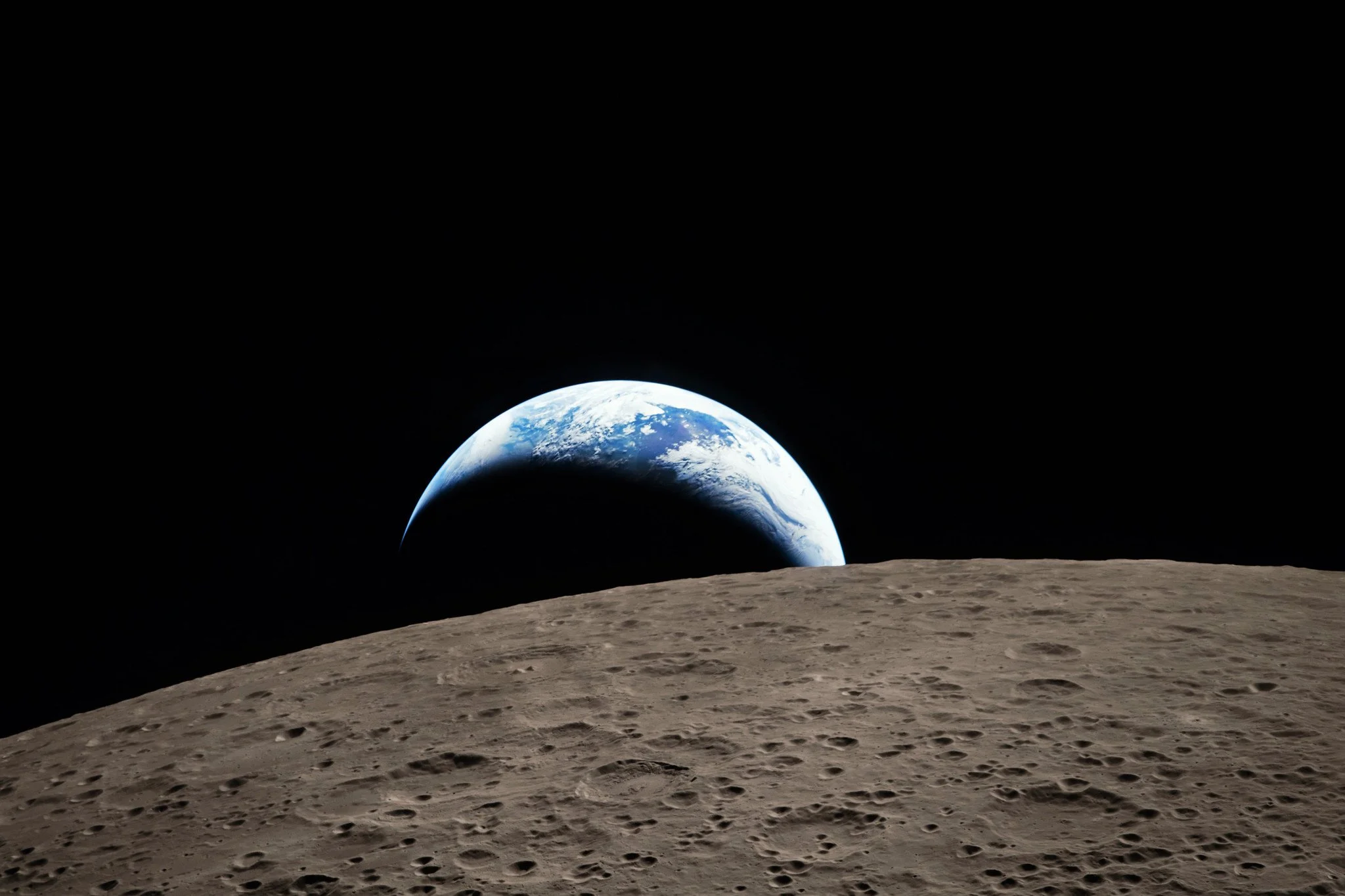
Credit: Earth, seen from the Moon. Image: NASA · Artemis II Earthset, 6 April 2026.